The research moved the conversation from "which currency should win?" to "how does the whole ecosystem work together?" — and that changed what four teams were building toward.
Users held a clean, two-tier mental model — the ecosystem handed them five overlapping tools
Users expected value to map to levels: one currency for the platform, one for the world they were in. The actual Meta ecosystem stacked five economic tools across the same four levels — with no shared logic for how they related. That mismatch, not "too many currencies," was the complexity users were feeling.
Two clean currency tiers users expected (left) vs. five overlapping tools the ecosystem actually presented (right), mapped across four value levels.
Research shaped the Metaverse Monetization Strategy and unified initiatives on 4 pillars
Twelve studies across 25+ countries surfaced the behavioral, emotional, and economic foundations of how users form value in virtual worlds. This became the backbone of Meta's Metaverse Monetization Strategy — adopted org-wide and organized around four unified pillars that aligned previously siloed teams.
Principles for Interoperable Economy in the Metaverse
Beyond the immediate strategy, the research established lasting design and strategy principles — a framework for how virtual economies should be architected as Meta scaled the metaverse.
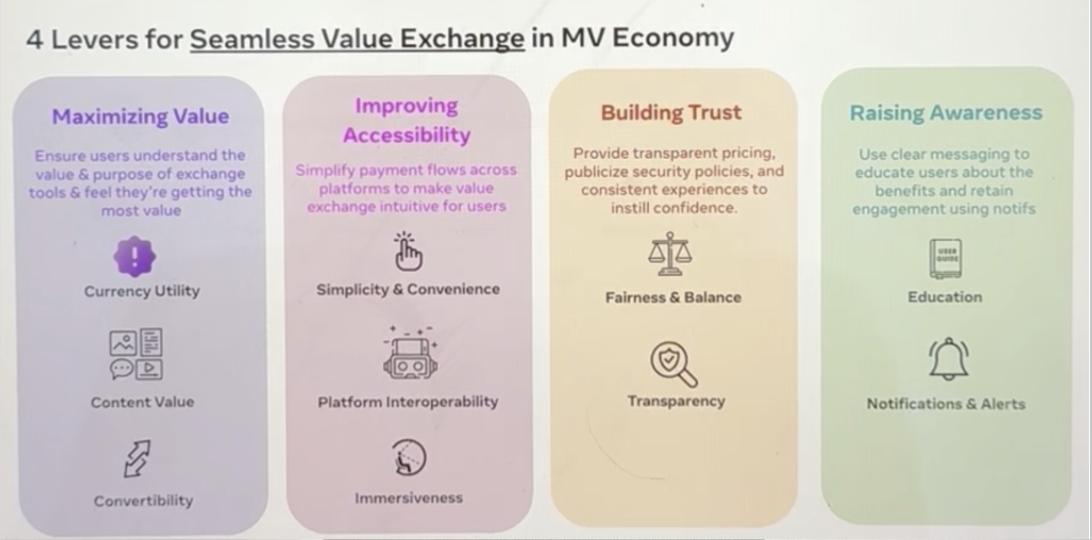
The framework artifact — shared with Metaverse Economy leads
What changed for each tool
Facilitated a 4-week Harmonizing Economy Tools Design Sprint with economy leadership — operationalizing insights into a shared decision-making framework. For the first time, four teams were working from the same map of the ecosystem.
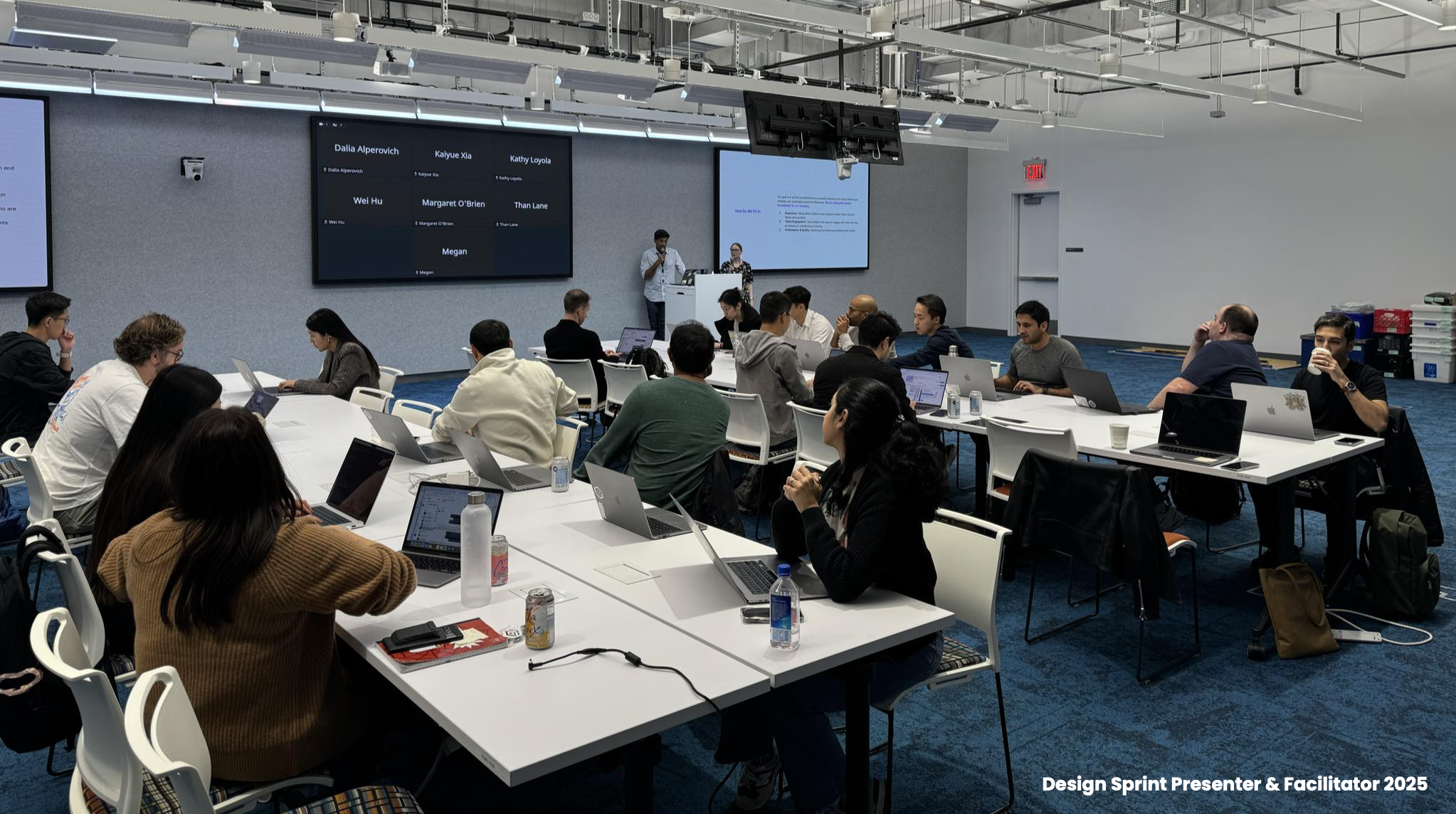
4-week design sprint — economy leadership, 4 teams, one map
Quest Cash → Cashback Wallet
Rebranded and redesigned as a wallet component convertible to Meta Credits — creating the interoperability loop users were missing. The gap between currencies finally had a bridge.
Ecosystem gap closedPrevented a costly global rollout
Stopped a planned global launch of redundant Meta Credits gift cards. Redirected to redesigning redemption for existing Quest Gift Cards instead — saving org resources and eliminating a major source of user confusion.
Avoided duplicated investmentMeta Points repositioned
Shifted from standalone currency to creator branding tool for in-world economies. Enabled creators to build proprietary virtual economies using the platform's infrastructure — unlocking a creator monetization layer that didn't exist before.
New creator economy surface4-Week Design Sprint → Shared Framework
Facilitated the Harmonizing Economy Tools Sprint with economy leadership — operationalizing research into a shared decision-making framework. For the first time, four teams were working from the same map of the ecosystem.
4 roadmaps unifiedNot because the product changed dramatically.
Because the trust did.